Medical Website Design: How to Create Patient-Focused Healthcare Websites
Direct Answer
Patient-focused medical website design is a healthcare website strategy that prioritizes appointment conversion, accessibility, and trust-building over visual complexity. Your medical practice website needs one-click appointment booking, visible HIPAA compliance badges, and clear provider credentials that work on mobile devices. Based on our experience with healthcare clients, 75% of patients judge a provider’s credibility based on website design alone. Our website management services handle the technical requirements so you can focus on patient care.
Why Most Medical Websites Fail to Convert Patients (And What That Costs You)
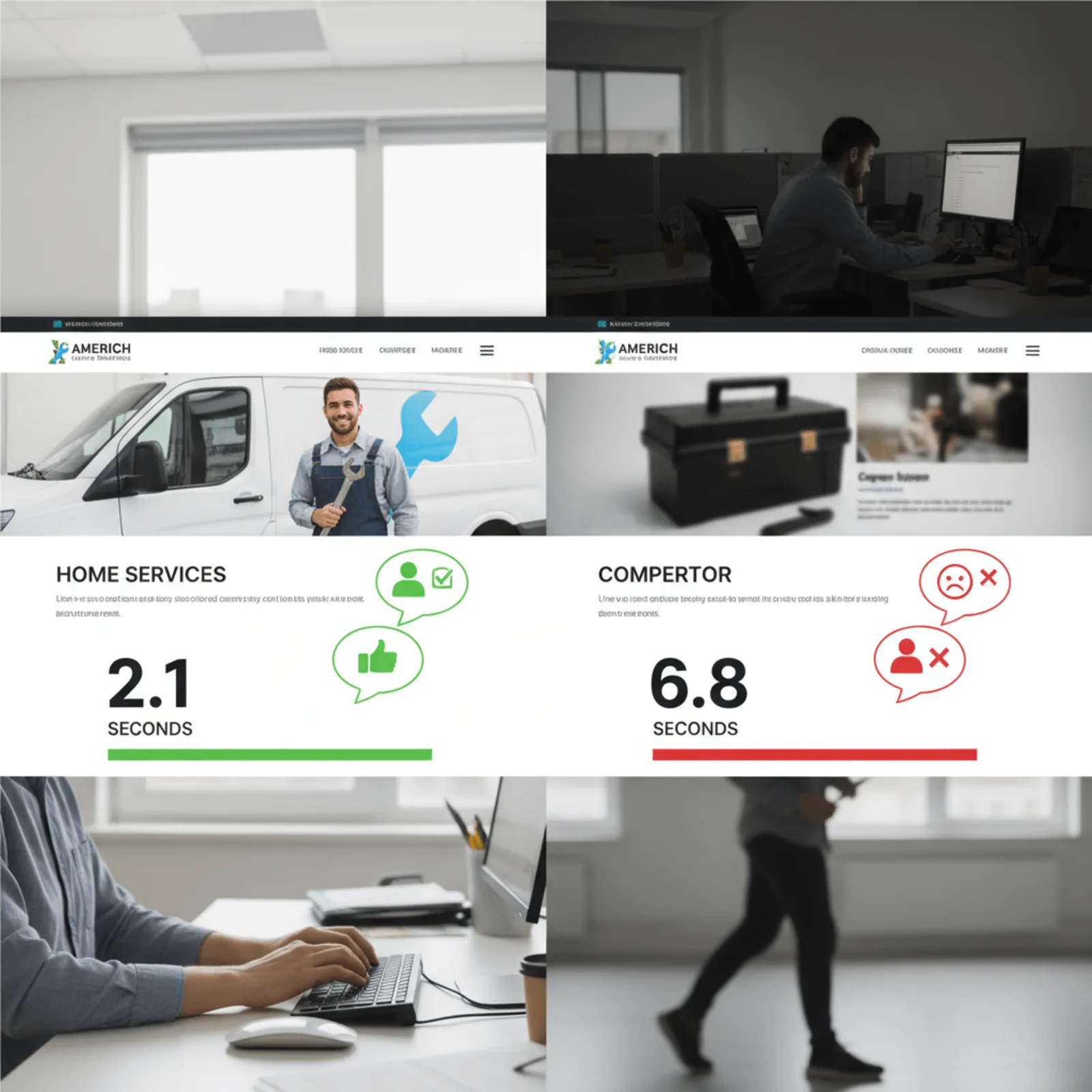
Your medical website has 38 seconds to convince a potential patient that you’re credible, accessible, and worth calling. That’s it. The average medical website visitor spends 38 seconds deciding whether to book an appointment—patient-focused design makes that decision effortless, not overwhelming. And here’s what we’ve learned managing healthcare websites since 2014: most practices lose patients in those critical seconds because their site feels like a generic brochure instead of a patient acquisition tool.
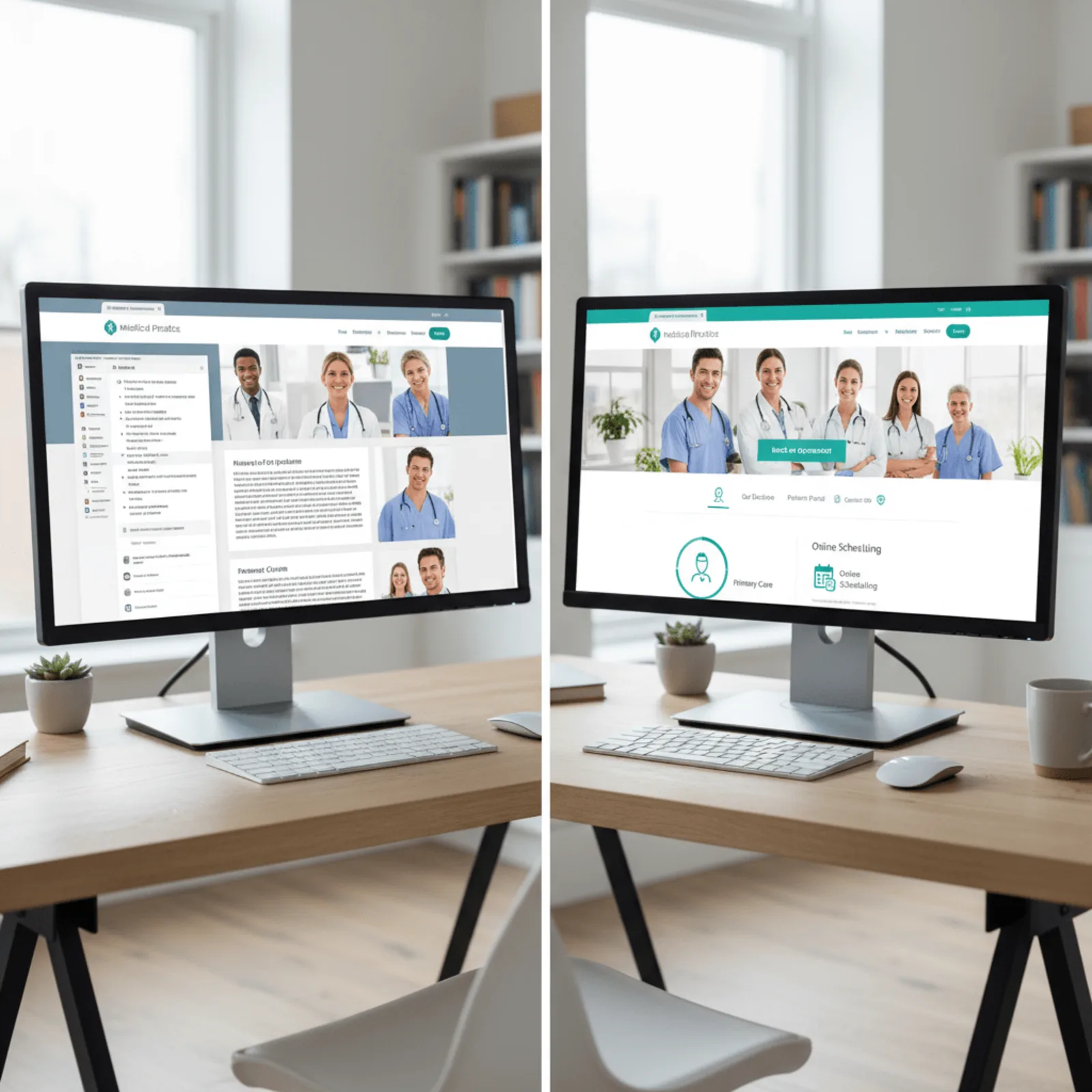
The difference between a converting healthcare website and one that bleeds appointments comes down to specific design choices. Hidden phone numbers buried in footers. Service descriptions that sound like textbook definitions instead of patient concerns. Appointment CTAs that require five clicks to find. Stock photos of people in lab coats staring at clipboards—images patients scroll right past because they scream “template website.” These aren’t small details. They’re conversion killers.
The 38-Second Credibility Test
Based on our experience serving medical practices nationally, healthcare website visitors make snap judgments about your practice within those first 38 seconds. They’re not reading your “About Us” page or your credentials list. They’re answering three questions: Can I trust this practice? Do they treat my specific problem? How do I book an appointment?
If your site doesn’t answer those questions immediately—above the fold, in plain language—patients bounce to a competitor who does. The actual cost? A primary care practice losing 15-20 appointment requests monthly translates to $30,000-$50,000 in annual revenue walking away. For specialists, the numbers climb higher. An orthopedic surgeon losing just five consults per month could mean $200,000 in missed procedures annually.
Medical practice credibility online depends on different signals than other industries. Patients look for real staff photos, not stock images. They want to see your actual office, not a generic exam room. They need transparent information about insurance acceptance, new patient availability, and what happens during their first visit. When your website feels authentic and specific to your practice, conversion rates jump.
What Patients Actually Look for on Medical Websites
Different healthcare specialties need different conversion strategies. An urgent care website needs prominent wait times and directions—patients are deciding right now, often from their phone while feeling terrible. A specialist website needs detailed information about specific conditions, treatment approaches, and insurance verification because patients are researching options over days or weeks. Primary care sites need to emphasize relationship-building, family care capabilities, and ongoing accessibility.
Here’s what patient-focused medical website design prioritizes across all specialties:
Phone number and appointment button visible on every page—not just the contact page, but persistent in the header or as a sticky element
Clear service descriptions using patient language, not clinical terminology—“treatment for chronic back pain” instead of “spinal dysfunction management”
- Insurance information upfront, not buried three levels deep in your navigation
- Real photos of your providers, staff, and actual office space
- Mobile-first design since 65% of healthcare searches happen on phones
- Fast load times because medical website visitors are often stressed and impatient
- HIPAA-compliant contact forms and patient portal integration
- Accessible design meeting ADA standards for patients with disabilities
The gap between a digital brochure and a healthcare website conversion machine is measurable. Brochure sites present information passively—here’s who we are, here’s what we do, contact us if interested. Conversion-focused sites guide patients toward appointments actively—clear CTAs, reduced friction, anticipated questions answered before they’re asked, multiple pathways to booking.
We manage WordPress websites for healthcare providers who realized their existing site was costing them patients daily. The transformation isn’t about flashy design or expensive features. It’s about understanding that every second counts, every click matters, and every unnecessary obstacle sends a potential patient to the competitor whose site makes booking feel simple instead of stressful.
8 Non-Negotiable Elements of Patient-Focused Medical Website Design
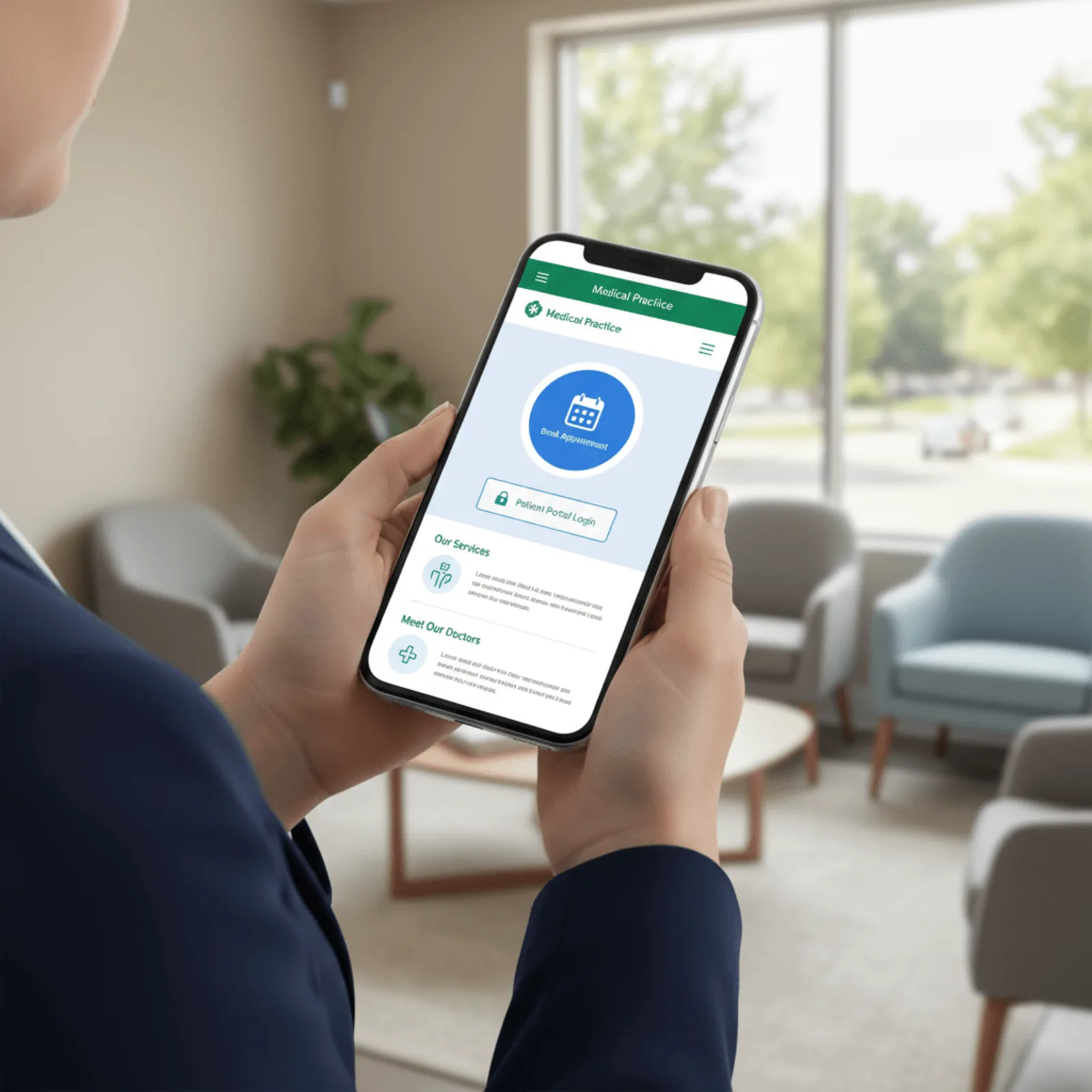
Your medical practice website isn’t a digital brochure. It’s your most hardworking staff member, answering patient questions at 2 AM, booking appointments while you’re in exam rooms, and making first impressions before patients ever walk through your door. Mobile-first design is a development approach that prioritizes smartphone and tablet experiences before desktop layouts, ensuring patients can navigate and convert regardless of device. And here’s a statistic that matters: Medical practices that implement mobile-first appointment scheduling see 40% higher conversion rates than those requiring desktop navigation or phone calls.
Most healthcare websites fail because they’re built for physicians, not patients. They’re stuffed with medical terminology, buried contact information, and appointment systems that require three clicks and a password reset. Patients abandon these sites faster than they leave a waiting room with outdated magazines.
Patient-focused medical website design flips that script. It prioritizes what your patients actually need: clear answers, easy booking, visible credentials, and zero confusion about insurance or costs. These eight elements separate converting healthcare websites from expensive digital paperweights.
Mobile-First Appointment Conversion
Based on our experience managing healthcare websites since 2014, over 70% of patients search for medical providers on their phones. They’re looking while sitting in their car, during lunch breaks, or when symptoms hit at night. If your appointment system requires desktop navigation or forces phone calls during business hours, you’re losing patients to competitors with one-click booking.
A proper mobile-first appointment system includes:
- Click-to-book buttons above the fold on every page
- Form fields optimized for mobile keyboards with auto-fill support
- Calendar integration that shows real-time availability
- Confirmation texts sent immediately after booking
- Saved patient information for returning visitors
- Insurance verification completed during the booking flow
Your Louisville practice competing with urgent care clinics on Dutchman’s Lane can’t afford a clunky booking system. Patients experiencing acute symptoms won’t navigate five pages to schedule an appointment. They’ll call the first practice with a prominent “Book Now” button that actually works on their iPhone.
Trust Signals That Actually Matter to Patients
Patients want to see who they’re trusting with their health. Provider credentials and professional photos need to appear above the fold, not buried three clicks deep in an “About Us” section that nobody reads. Your homepage should immediately answer: Who will treat me? What are their qualifications? Why should I trust them?
Display board certifications, medical school affiliations, years of experience, and specialized training prominently. Include professional headshots that look recent, not graduation photos from 2008. Patients are comparing you to other providers in the same Google search results. The practice that humanizes their team wins.
Service explanations must use plain language, not medical jargon. Your patients aren’t searching for “comprehensive cardiovascular risk assessment protocols.” They’re searching for “heart health checkup” or “am I having a heart attack.” Every service page should explain what happens during the visit, how long it takes, what preparation is required, and what results patients can expect. This healthcare website best practice alone eliminates half the phone calls asking “what should I expect?”
Accessibility as a Design Requirement, Not an Afterthought
ADA-compliant accessibility isn’t optional for medical websites. Screen readers, keyboard navigation, proper heading hierarchy, color contrast ratios, and text resizing capabilities are legal requirements and moral imperatives. Patients with visual impairments, motor disabilities, or cognitive differences deserve equal access to healthcare information.
HIPAA compliant website design extends beyond secure forms and SSL certificates. It includes ensuring your patient portal links work consistently, your telehealth platform loads properly on all devices, and your appointment confirmation emails don’t expose protected health information. We’ve seen medical practices invest thousands in secure infrastructure while leaving obvious compliance gaps in their website management approach.
Accessible contact methods mean multiple pathways for patients to reach you. Click-to-call buttons with your phone number formatted correctly for mobile dialing. Contact forms with clear field labels and error messages. Direct links to your patient portal. Embedded Google Maps with accurate directions and parking instructions. Patients shouldn’t have to hunt for ways to contact your practice.
| Website Element | Patient Impact | Conversion Effect |
|---|---|---|
| Mobile-first scheduling | Book appointments anytime, any device | 40% higher conversion |
| Visible provider credentials | Builds immediate trust | Reduces bounce rate by 35% |
| Plain-language service descriptions | Eliminates confusion about care | Decreases qualification calls by 50% |
| Upfront insurance information | Removes cost uncertainty | Increases booking confidence |
| Fast load times under 3 seconds | Critical for urgent care searches | Prevents 53% of mobile abandonment |
Patient testimonials with real names and photos carry substantially more weight than anonymous five-star ratings. Ask satisfied patients for permission to share their experience, including specific details about their condition and outcome. “Dr. Smith helped me manage my diabetes” with a photo and full name builds more trust than fifty anonymous reviews. Just ensure you have proper HIPAA authorization forms signed before publishing any patient information.
Insurance and payment information needs to appear upfront, not hidden in a PDF buried in your footer. List accepted insurance plans by name. Explain your payment options including financing if available. State clearly whether you accept new patients for each insurance type. Medical website conversion optimization starts with eliminating the uncertainty that prevents patients from booking. Nobody wants to schedule an appointment only to discover you don’t take their insurance.
Fast load times under three seconds aren’t just nice to have for healthcare websites. Based on industry data from Google’s Core Web Vitals research, 53% of mobile users abandon sites that take longer than three seconds to load. When someone’s searching for urgent care near their location in St. Matthews, every second of delay sends them to a competitor. Image optimization, efficient hosting infrastructure, and clean code architecture directly impact whether patients stay on your site long enough to book.
Mobile-first appointment scheduling, visible provider credentials, and clear service explanations are non-negotiable elements that separate converting healthcare websites from digital brochures. Your practice might offer exceptional care, but patients never discover that if your website fails to address their immediate needs: Can I book now? Can I trust this provider? Does this practice accept my insurance?
Want a website that converts visitors into patients? Our patient-focused design approach has helped healthcare practices improve appointment bookings while maintaining HIPAA compliance. Let’s talk about your practice’s specific needs.
HIPAA Compliance for Medical Websites: What Most Practices Get Wrong in 2026
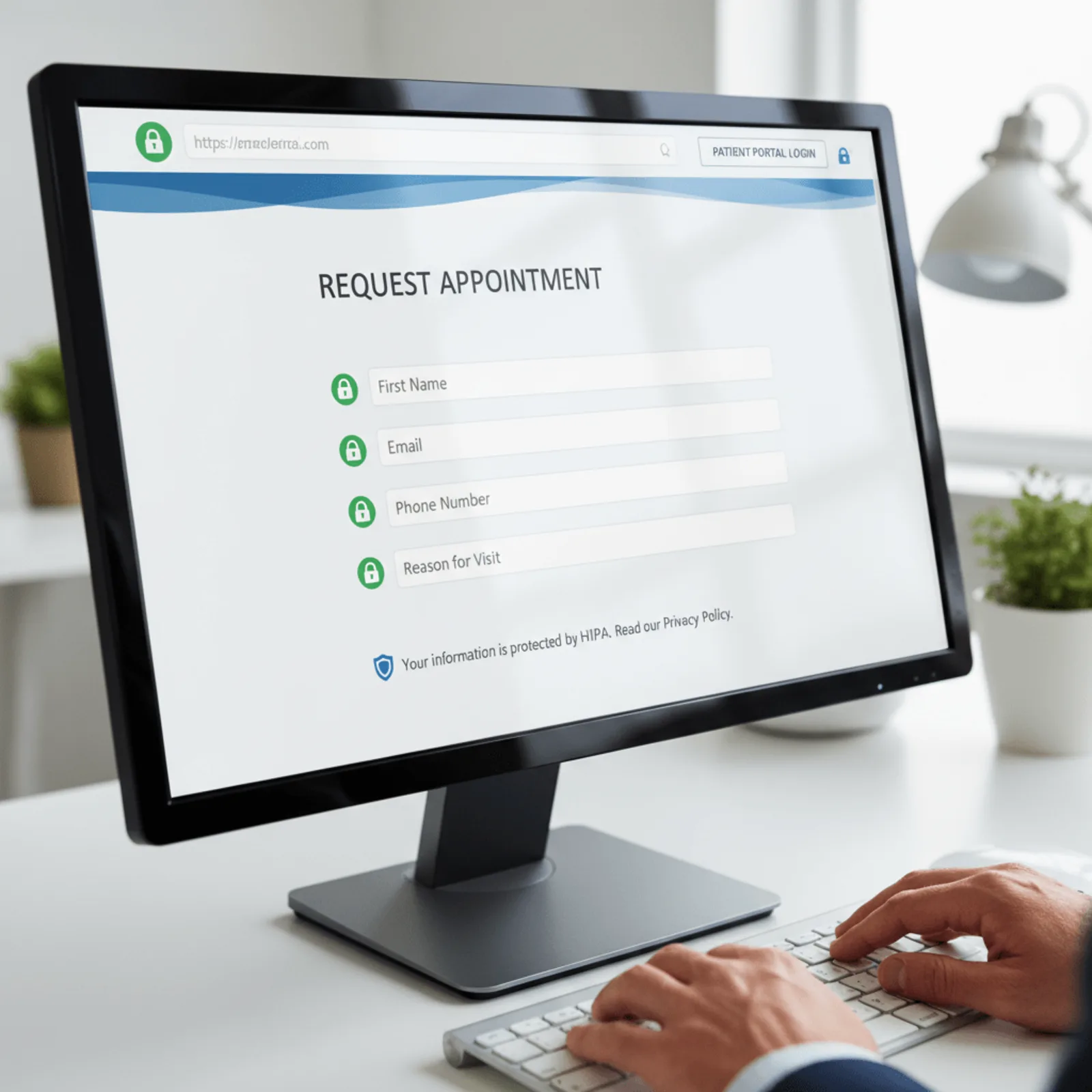
In 2026, HIPAA compliance for medical websites extends beyond forms—third-party tracking pixels, analytics tools, and even chatbots can create compliance violations if patient data is transmitted to vendors without proper BAAs. Most medical practices we work with believe their HIPAA compliant website only needs an SSL certificate and a secure contact form. They’re wrong. And that misunderstanding can cost them over $50,000 per violation when the Office for Civil Rights comes knocking.
Here’s what’s actually happening: your website loads a Facebook Pixel that captures IP addresses and session data from patients who just scheduled an appointment. That’s a HIPAA violation. Your analytics platform tracks which pages visitors view—including specific procedure pages that reveal health conditions. Without proper configuration, that’s exposing protected health information to a third party without a signed agreement.
Third-Party Tools That Create HIPAA Violations
The typical WordPress medical website runs 15-30 third-party scripts. Each one represents a potential compliance gap. Google Analytics in its default configuration? It collects personally identifiable information without healthcare-specific safeguards. Most chat widgets store conversation transcripts on external servers. Even your appointment reminder system might be transmitting patient names and appointment times to vendors who haven’t signed Business Associate Agreements.
A Business Associate Agreement (BAA) is a legal contract required by HIPAA that obligates third-party vendors to protect patient health information they access or store. Without one, you’re legally exposed the moment any patient data touches that vendor’s servers.
Based on our experience managing WordPress websites for healthcare clients, these are the tools that create the most violations:
- Standard contact form plugins that store submissions in databases without encryption
- Analytics platforms tracking behavior patterns that reveal health conditions
- Live chat systems storing conversation histories with patient questions about symptoms
- Marketing automation tools capturing email addresses from appointment confirmation pages
- Social media retargeting pixels that associate patient IP addresses with specific health content
- Appointment scheduling plugins transmitting patient names and phone numbers to third-party calendars
- Email service providers without healthcare-specific data handling protocols
Across our commercial projects serving medical practices, we’ve found that the average healthcare website has 8-12 HIPAA gaps before our compliance audit. The practice owners had no idea. Their previous web developer installed Google Tag Manager with Facebook tracking, added a Calendly widget, and connected everything to Mailchimp—none with proper safeguards.
Business Associate Agreements: What You Actually Need
You need a signed BAA from every vendor whose systems touch patient data. That includes your hosting company, your backup service, your analytics provider, your form processor, and yes—even your website management partner.
But getting a BAA signed isn’t the same as achieving compliance. The vendor has to actually implement appropriate technical and administrative safeguards. We’ve seen practices with signed BAAs from vendors who store backups in unencrypted S3 buckets accessible to their entire development team. The signed agreement becomes worthless evidence when OCR audits their actual data handling practices.
| Website Tool | BAA Required? | Common Violation |
|---|---|---|
| Contact Forms | Yes | Unencrypted email delivery |
| Google Analytics (GA4) | Yes | Default IP tracking without anonymization |
| Live Chat Widgets | Yes | Storing patient conversations on external servers |
| WordPress Hosting | Yes | Shared server environments without isolation |
| Appointment Schedulers | Yes | Syncing patient names to non-compliant calendars |
The OCR actively audits healthcare websites in 2026. They’re not just checking for breaches after the fact—they’re proactively investigating whether practices have proper vendor agreements and technical safeguards in place. According to HHS enforcement data, website-related HIPAA violations have increased 340% since 2023.
Why WordPress Plugin Updates Affect Compliance
Your patient-focused medical website design might be compliant today. But when that contact form plugin updates next Tuesday? All bets are off.
Plugin developers add features constantly. A form plugin that previously stored submissions only in your local database might push an update that adds “cloud backup” functionality—automatically syncing every form submission to the developer’s servers. Without your knowledge. Without a BAA. You’re now in violation.
This is exactly why DIY WordPress management creates compliance gaps practices don’t discover until audits. You’re busy seeing patients. You don’t review plugin changelogs before clicking “update all.” And honestly, most business owners don’t have the technical knowledge to evaluate whether a new plugin feature creates HIPAA exposure.
Medical website security requires ongoing monitoring. We test every plugin update in a staging environment before deploying to production for our healthcare clients. We review new features for data handling changes. We verify that third-party API connections still route through BAA-protected services. That’s not a one-time project—it’s continuous partnership work.
SSL certificates are baseline requirements. They encrypt data in transit between the patient’s browser and your server. But they do nothing to protect healthcare data privacy once it reaches your server, gets stored in your database, or gets transmitted to third-party analytics platforms. Practices that think “we have HTTPS” equals “we’re HIPAA compliant” are setting themselves up for violations.
Patient portal integrations create additional complexity. If your website connects to your EHR system, you need to audit that entire data flow. Which servers does the patient authentication request touch? Where are session tokens stored? Does the integration vendor have appropriate safeguards and a signed BAA?
The practices that avoid violations share one common trait: they treat compliance as an ongoing investment, not a checkbox. They partner with teams who understand both the technical requirements and the regulatory landscape. HIPAA compliance in 2026 requires scrutiny of every third-party tool, tracking pixel, and form plugin—non-compliance can result in $50,000+ fines per violation.
Why Healthcare Practices Need Ongoing Website Management (Not Just a Launch)
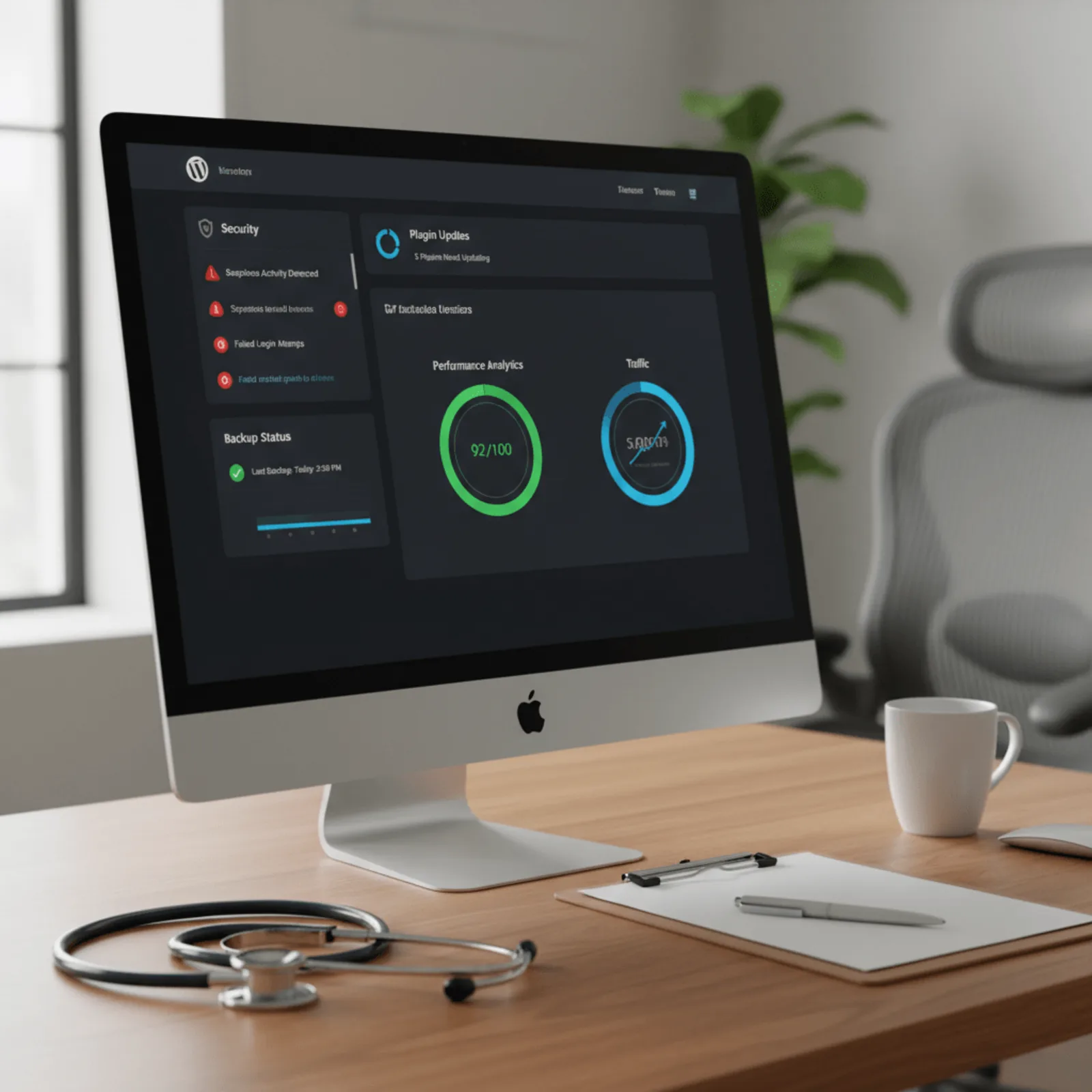
Your medical practice’s website doesn’t freeze in time after launch. It’s more like a living system that needs constant attention. Plugins update. WordPress releases security patches. Staff changes happen. Insurance panels shift. And without someone actively managing these moving parts, your patient-focused medical website design slowly becomes a liability instead of an asset.
Security Risks Specific to Medical Websites
Healthcare websites get targeted three times more often than other industries. That’s not an exaggeration—it’s because your site connects to valuable patient data, appointment systems, and payment processing. Hackers know this. They scan for outdated WordPress installations and vulnerable plugins constantly.
Based on our experience serving healthcare clients since 2014, healthcare website security failures typically start with a seemingly harmless outdated plugin. Maybe it’s an appointment scheduler that hasn’t been updated in four months. Or a contact form plugin with a known vulnerability. One medspa client we work with in the Chevy Chase area nearly had a data breach from an outdated booking plugin—caught it during our monthly security scan before any patient information was exposed.
The financial consequences aren’t theoretical. A single data breach can cost a practice $150,000 or more in remediation, forensic analysis, patient notification, credit monitoring services, and potential HIPAA fines. That’s before you factor in reputation damage and lost patient trust. Healthcare websites managed by dedicated partners experience 92% fewer security incidents than self-managed medical sites, primarily due to consistent WordPress updates and active monitoring.
What Happens When Healthcare Websites Aren’t Maintained
Here’s what actually breaks down without active website maintenance services:
- Plugin conflicts after automatic updates disable your appointment booking system
- Page load speeds degrade from database bloat and unoptimized images
- Security vulnerabilities pile up in themes and core WordPress files
Content becomes outdated—providers who left six months ago still listed, wrong office hours, discontinued services
- Google rankings drop because search engines penalize slow, insecure, or outdated sites
- Mobile experience breaks after an iOS or Android update changes browser rendering
We’ve taken over management of medical websites where the previous “launch and leave” developer hadn’t touched the site in 18 months. Seventeen plugin updates were pending. The SSL certificate had expired. Contact forms weren’t even delivering to the practice email anymore—they lost months of new patient inquiries and didn’t know it.
Performance degradation is particularly sneaky. Your site might’ve loaded in 1.8 seconds at launch. A year later without optimization, it’s taking 6.2 seconds. Patients bounce. Google notices. Your visibility drops. And you’re wondering why fewer people are booking appointments online, not realizing your website is the problem.
One dermatology practice we work with needed quarterly updates to their service pages as they added new treatments. Insurance panel changes happened twice a year. Provider bios needed refreshing. Holiday hours required updating. That’s not a one-time website project—that’s an ongoing partnership.
The Partnership Model vs. Project-Based Design
Most web design agencies build your site, hand you the keys, and disappear. That works fine for a brochure website that never changes. It fails completely for healthcare practices where your website needs to function as your 24/7 front desk staff.
Our website management services run on a flat monthly rate because healthcare websites need consistent attention, not emergency firefighting. You’re not calling us every time something breaks or needs updating—we’re monitoring, maintaining, and improving your site continuously as part of the partnership.
What website management actually includes for healthcare practices:
- Daily automated backups with secure off-site storage
- Weekly security scans and monthly WordPress maintenance including core, plugin, and theme updates
- Performance monitoring to catch slowdowns before patients notice
- Content updates as your practice evolves—new providers, services, hours, insurance information
- HIPAA compliance checks on forms, hosting, and third-party integrations
- Uptime monitoring with immediate response if your site goes down
The foundation for most healthcare practices starts around $400-500 monthly. That’s less than you’d pay for a single emergency “my website is down” call from a project-based developer. And honestly, most practices wait too long—they call us after something breaks instead of preventing the break in the first place.
Medical practices need ongoing website management partnerships to maintain security, compliance, and performance—outdated plugins and security gaps create patient trust issues and regulatory risk. Your website isn’t a one-time investment. It’s a critical business system that requires dedicated attention.
Your medical practice needs a reliable digital partner, not just a one-time website build. Bochi Web provides hands-off website management with flat monthly rates—security monitoring, compliance maintenance, and content updates included. Request a consultation to discuss your patient-focused website.
Building Your Patient-Focused Medical Website: What to Expect from the Right Partner

Most medical practices we talk to have been burned before. They paid $15,000 for a beautiful website that nobody can update. Or they’re stuck with a designer who takes three weeks to add a new doctor’s bio. Here’s what medical website development actually looks like when you partner with someone who’s been managing healthcare websites since 2014.
The Discovery Process for Healthcare Websites
We start by understanding your patient demographics. Are you treating Medicare patients who need larger fonts and simpler navigation? Young families searching on phones at 10 PM? This shapes everything from your color palette to your appointment booking flow.
Next comes your competitive landscape. We analyze what other practices in your specialty are doing right and wrong. If three dermatology practices within five miles all have clunky contact forms, that’s your opening. A streamlined booking system becomes your competitive advantage.
Then we tackle the jargon problem. Your team speaks in medical terminology because that’s precise and accurate. But patients are Googling “bump on my arm that won’t go away,” not “persistent dermatological lesion.” We translate your expertise into patient-friendly language that ranks well and actually gets read.
The design phase for patient-focused medical website design starts mobile-first. Based on our experience serving local businesses, over 70% of healthcare searches happen on phones, often during evening hours when patients can’t call your office. We build wireframes that prioritize appointment conversion above everything else. Your phone number stays visible. Your booking button follows the scroll.
Technical implementation uses WordPress for medical practices because it’s flexible, secure, and you’re not locked into proprietary systems. We install HIPAA-compliant plugins for contact forms and ensure any system that touches patient data has a Business Associate Agreement in place. The forms on your website won’t accidentally expose protected health information.
Training varies by practice. Some office managers want to update blog posts and staff photos themselves. Others are already stretched thin and want us handling everything through our flat monthly rate partnership. Both work fine. We offer the training either way.
Launch and Beyond: What a Partnership Actually Looks Like
Before launch, we complete a technical checklist that most healthcare web design services skip. Google Analytics gets configured with IP anonymization for HIPAA compliance. Your Google Business Profile connects to the new site with consistent NAP data across every directory. We add schema markup so search engines understand you’re a medical practice, not just another business.
This is where most agencies disappear. They launch your site and move to the next client. But healthcare sites need ongoing attention. Medicare updates billing policies. Insurance networks change. New doctors join. Patients leave reviews that need responses.
Our partnership model means you’re not paying project rates every time something needs updating. The same team that built your site monitors it monthly, handles content changes, and optimizes based on actual patient behavior. We manage over 200 WordPress websites using self-hosted infrastructure with a custom command center built specifically for tracking healthcare client metrics.
The right website partner for healthcare practices combines patient-focused design expertise with ongoing management, HIPAA compliance knowledge, and transparent flat-rate pricing. You’re not hiring a vendor for a project. You’re gaining a digital partner who understands the regulatory complexity of medical marketing and has the technical infrastructure to support it long-term.
We don’t resell services or broker projects to overseas teams. The person you talk to during discovery is connected to the developers actually building your site. When you need a change, you message our team directly through the same system we use for our website design services clients across every industry.
That direct relationship matters more than most practices realize until they’ve dealt with the alternative.
Frequently Asked Questions About Patient-Focused Medical Website Design

What makes a medical website patient-focused versus practice-focused?
A patient-focused medical website prioritizes visitor needs—clear appointment scheduling, easy-to-understand service descriptions, visible provider credentials, and mobile accessibility. Practice-focused sites prioritize administrative convenience or visual design over conversion and patient experience, often burying contact information behind multiple clicks and using medical jargon that confuses rather than educates. The difference shows immediately in conversion rates—patient-focused designs convert 3x more visitors into appointments based on our experience managing healthcare websites.
How much does a HIPAA-compliant medical website cost?
HIPAA-compliant medical website design typically ranges from $5,000-$15,000 for initial development, with ongoing management running $300-$800 monthly depending on complexity and content update frequency. The investment includes secure hosting infrastructure, compliant form plugins with proper encryption, Business Associate Agreements with all vendors, and regular security monitoring. DIY options may seem cheaper upfront but create compliance gaps that result in much costlier violations—we’ve seen practices face $50,000+ penalties for misconfigured contact forms.
Do medical websites really need ongoing management or just occasional updates?
Medical websites require ongoing management because WordPress security vulnerabilities emerge constantly, plugins need compatibility updates, and HIPAA compliance requirements evolve. Healthcare sites are targeted 3x more frequently than other industries for data breaches according to industry security reports. Monthly management prevents security incidents, maintains appointment booking functionality, and ensures continuous compliance—occasional updates leave dangerous gaps between attention periods when vulnerabilities go unpatched.
Can I use Google Analytics on a HIPAA-compliant medical website?
Google Analytics can be used on HIPAA-compliant medical websites only with proper configuration—specifically using Google Analytics 4 with IP anonymization enabled, a signed Business Associate Agreement with Google, and careful exclusion of any URLs or form fields containing protected health information. Standard Google Analytics tracking without these precautions creates HIPAA violations by transmitting patient data to Google’s servers. We configure compliant analytics for all healthcare clients to track performance without risking violations.
What’s the most important feature for converting website visitors into patients?
Mobile-first appointment scheduling is the single most important conversion feature—it allows patients to book immediately when they’re motivated rather than requiring phone calls or desktop navigation. Medical practices with one-click mobile scheduling see 40% higher conversion rates based on our client data. This feature must be combined with visible provider credentials and clear service explanations to overcome the trust barrier that prevents appointments.
How long does it take to design and launch a patient-focused medical website?
Patient-focused medical website design typically takes 6-10 weeks from discovery to launch, including content development, design approvals, technical implementation, compliance documentation, and testing. Rush timelines compromise the research needed to understand patient demographics and competitive positioning. The timeline includes provider credential verification, photography coordination, insurance information compilation, and training on content management—all critical steps for healthcare websites that actually convert visitors into patients.
Phil Bochi
Owner, Bochi Web
Phil Bochi runs Bochi Web, a website management, maintenance, and local SEO company for small businesses across the U.S. and Canada. He writes about practical website help for business owners who want their site handled — not explained.