What Is Web Development for Small Business Owners?
 Web development is the technical process of building, programming, and maintaining a website’s functionality, performance, and backend systems—distinct from web design which focuses on visual appearance and user interface aesthetics. For service-based businesses like electricians, medspas, restaurants, and contractors, professional web development means creating digital infrastructure that generates leads while you’re running service calls, not just a pretty brochure that sits idle online.
Most Marion business owners don’t realize their website struggles stem from development issues, not design problems. When your site loads slowly, doesn’t show up on mobile phones correctly, or requires a developer’s help every time you want to change your hours, you’re experiencing the consequences of inadequate business website development. The good news? Proper custom website development solves these problems permanently.
Web Development vs Web Design: Understanding the Difference
Web design determines how your site looks—the colors, fonts, layout, and images that reflect your brand. Web development determines how your site works—the speed, functionality, mobile responsiveness, security protocols, and content management capabilities that directly impact whether potential customers can find you, trust you, and contact you.
A beautifully designed website that takes eight seconds to load on mobile phones won’t generate leads. A visually simple site that loads in 1.5 seconds, ranks on Google Maps, and lets customers book appointments directly will drive measurable business growth. That’s the fundamental difference between prioritizing design over development.
Professional web development for small businesses should prioritize three elements: fast loading speeds under 2 seconds, mobile-responsive design that adapts to all devices, and content management systems that business owners can actually update without calling a developer every time.
What Modern Web Development Includes in 2026
Today’s professional web development for service businesses encompasses significantly more than basic HTML coding. When you partner with a website management provider offering custom website design services, you’re investing in technical infrastructure that functions as a 24/7 business asset.
Core elements of custom website development for local businesses include:
- Core Web Vitals optimization ensuring Google ranks your site higher based on performance metrics like loading speed, interactivity, and visual stability
- Mobile-first development prioritizing smartphone experience since 73% of local service searches happen on mobile devices
- WordPress CMS configuration allowing you to update services, prices, photos, and blog posts without technical knowledge
- Security hardening with SSL certificates, firewall protection, malware scanning, and automated backup systems
- Local SEO integration connecting your website to Google Business Profile, ensuring accurate NAP (name, address, phone) consistency across platforms
- Conversion-focused functionality including click-to-call buttons, contact forms, appointment scheduling, and service area pages
- Ongoing maintenance workflows covering plugin updates, uptime monitoring, broken link fixes, and performance optimization
The distinction between development for service businesses versus e-commerce or content sites matters significantly. A medspa doesn’t need shopping cart functionality—you need before/after galleries, service descriptions, practitioner bios, and appointment booking. A contractor doesn’t need a blog platform—you need project portfolios, service area coverage maps, license verification, and estimate request forms.
Professional web development combines technical excellence with business strategy, creating websites that function as 24/7 sales tools rather than static brochures that require constant owner intervention. When a potential customer searches “emergency electrician near me” at 9 PM, your website’s development quality determines whether your business appears in results, whether the page loads before they give up, whether your phone number displays prominently on mobile, and whether they can immediately understand your service area coverage.
That’s web development working for your business instead of against it.
Custom WordPress Development vs Template Website Builders
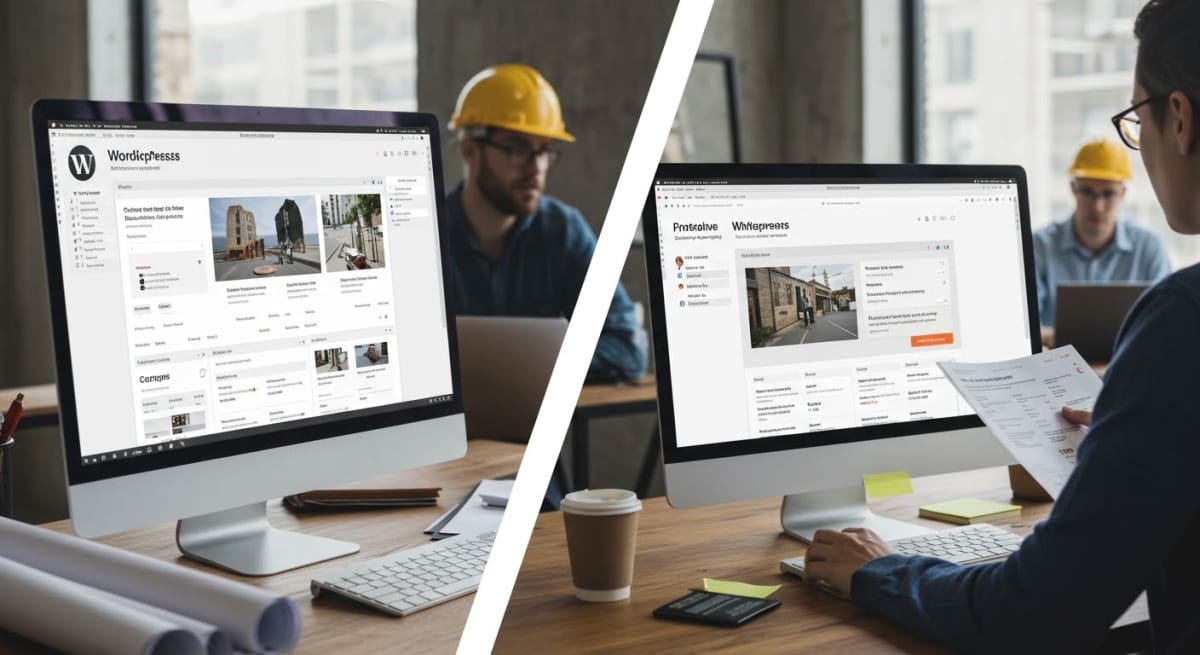 Custom WordPress development is the process of building unique websites using WordPress as the foundation while creating tailored functionality, custom designs, and specialized features specific to business requirements without template constraints. When Marion contractors, medspas, and restaurants evaluate web development options, they face a critical decision: invest in custom WordPress websites or subscribe to template builders like Wix, Squarespace, or GoDaddy Website Builder. This choice impacts everything from monthly costs to long-term business growth potential.
WordPress powers 43% of all websites globally in 2026, making it the dominant platform for small business web development. But custom WordPress development differs fundamentally from template-based solutions. Template builders offer quick setup with drag-and-drop simplicity, while custom WordPress development provides complete code access, unlimited customization potential, and eliminates monthly platform fees that can reach $300+ with proprietary builders.
The True Cost of Website Platform Lock-In
Platform lock-in happens when your website, content, and customer data remain trapped inside a proprietary system you don’t control. Template builders like Wix and Squarespace own the underlying code—you’re essentially renting website space rather than owning digital property. If you decide to leave, your custom design doesn’t transfer, your URL structure changes, and you lose SEO rankings you spent years building.
Marion business owners often discover this limitation when growth demands exceed what their template allows. An electrician wants to add service area pages for neighboring towns—the template restricts custom URL structures needed for local SEO. A medspa needs appointment scheduling integrated with their existing booking system—the platform only allows approved third-party apps with additional monthly fees. A dispensary requires age verification with specific compliance features—the template builder prohibits customization that touches core functionality.
Custom WordPress development eliminates these restrictions entirely. You own the code, database, and complete website infrastructure. Migration between hosting providers takes hours, not months. Functionality expands as your business grows without platform approval or subscription tier upgrades.
Factor Custom WordPress Development Template Website Builders
Upfront Investment $3,500-$8,500 one-time $0-$500 setup
Monthly Platform Fees $0 (hosting only: $25-75/mo) $25-$300/month subscription
5-Year Total Cost $5,000-$12,500 $1,500-$18,500
Code Ownership Complete ownership Platform retains ownership
Customization Limits Unlimited development potential Restricted to template/platform rules
Data Portability Full export capability Limited, platform-dependent
Local SEO Flexibility Custom URL structures, schema markup Template restrictions apply
Core Web Vitals Optimization Complete performance control Limited to platform capabilities
The website builder comparison reveals a counterintuitive truth: template builders appear cheaper initially but often cost more over five years when subscription fees accumulate. A Marion restaurant paying $45/month for Squarespace Business spends $2,700 over five years just for platform access—before factoring in premium features, email marketing add-ons, or advanced e-commerce capabilities that push monthly costs to $100-300.
Why WordPress Powers 43% of All Websites
WordPress website development dominates the small business market because it balances flexibility with manageability. The open-source platform provides the foundation, while custom development layers business-specific functionality without proprietary restrictions. Marion service businesses benefit from this approach because their websites evolve alongside business growth.
Key advantages of custom WordPress development include:
- Unlimited scalability: Add service pages, location landing pages, blog content, and custom functionality without platform permission or tier upgrades
- Complete SEO control: Custom URL structures, schema markup implementation, and Core Web Vitals optimization that template builders restrict
- Integration flexibility: Connect any CRM, booking system, inventory management, or business software through custom development or 60,000+ plugins
- Performance optimization: Direct server configuration, caching strategies, and code optimization that proprietary platforms limit
- Design ownership: Your brand identity, visual design, and user experience remain yours—portable to any hosting environment
- Security independence: Custom security protocols, SSL implementation, and backup strategies independent of platform vulnerabilities
Template builders excel for hobby projects or temporary landing pages. But Marion businesses treating their website as long-term business infrastructure require the ownership, flexibility, and cost efficiency that custom WordPress development provides.
WordPress powers 43% of all websites globally, but custom WordPress development differs fundamentally from template-based solutions—custom development provides complete code access, unlimited customization potential, and eliminates monthly platform fees that can reach $300+ with proprietary builders. This combination of ownership, flexibility, and cost efficiency explains why service businesses from electricians to medspas choose WordPress website development over proprietary alternatives.
Custom WordPress development provides small businesses complete ownership and flexibility without platform lock-in, monthly licensing fees, or restrictions that template builders impose on growth. Your website becomes a digital asset you control, not a rented service that disappears when subscriptions lapse.
Curious whether custom WordPress development fits your business needs? Bochi Web specializes in building websites for Marion service businesses that need reliable digital partners, not just one-time projects. Explore our custom website design services to see how ownership-focused web development supports long-term business growth.
Mobile-First Web Development and Core Web Vitals Performance
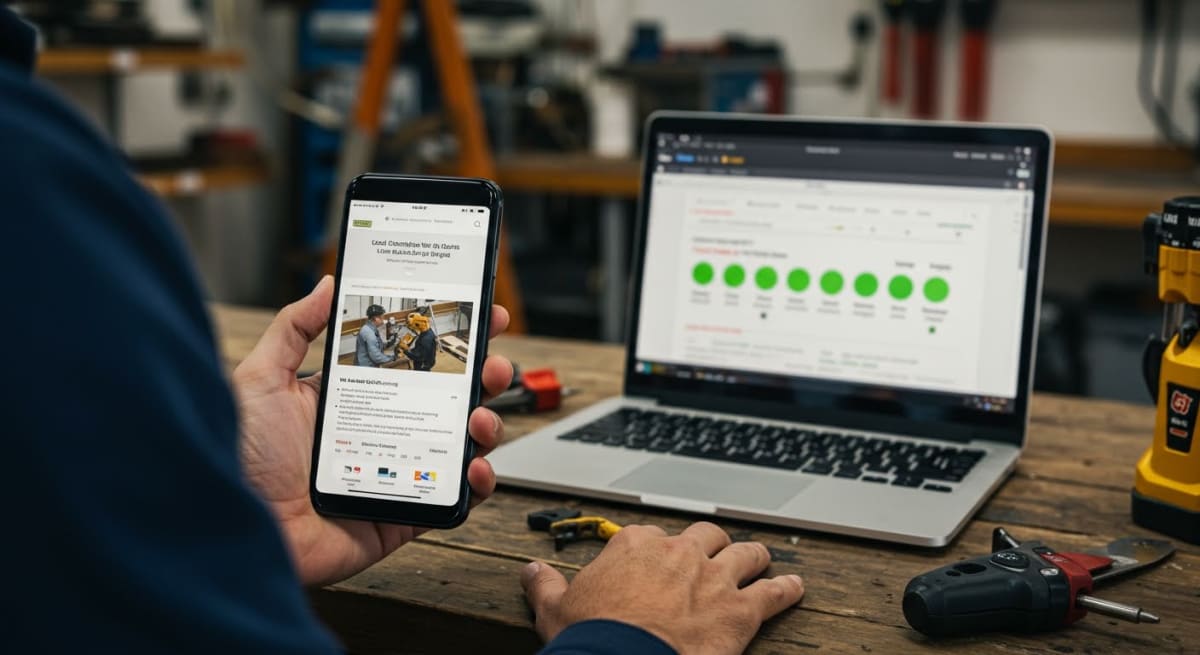 Your Marion contractor website loads beautifully on your office desktop, but when a homeowner searches “emergency plumber near me” on their phone at 9 PM, your slow-loading site never gets the call. In 2026, mobile-first web development isn’t optional anymore—it’s the foundation of how Google determines which local businesses show up in search results and which disappear into page three oblivion.
Core Web Vitals are Google’s standardized performance metrics measuring three critical user experience factors: Largest Contentful Paint (loading speed), First Input Delay (interactivity), and Cumulative Layout Shift (visual stability). These technical measurements directly translate to business outcomes. When your medspa website takes six seconds to load on mobile instead of two, you’re not just failing a Google test—you’re losing consultation bookings to competitors with optimized responsive website development.
In 2026, Google’s Core Web Vitals directly impact local search rankings, meaning a slow-loading website can cost Marion service businesses up to 40% of their local search visibility compared to competitors with optimized web development. The algorithm prioritizes sites that deliver fast, smooth mobile experiences because that’s what searchers expect and reward with clicks, calls, and conversions.
Understanding Core Web Vitals: Speed That Drives Rankings
Most electricians and restaurant owners don’t need to understand the technical intricacies of website performance optimization, but you do need to know what these metrics mean for your bottom line. Largest Contentful Paint measures how quickly your main content loads—the hero image, your contact form, or your service menu. Google wants this under 2.5 seconds on mobile devices. First Input Delay tracks how fast your site responds when someone taps your phone number or clicks “Book Appointment.” Cumulative Layout Shift measures whether buttons and text jump around while loading, causing frustrated users to click the wrong thing.
When your WordPress maintenance includes monthly Core Web Vitals monitoring, these technical requirements become business advantages. The difference between a poorly optimized dispensary website and one built with mobile-first web development shows up in measurable ways:
- Local search visibility in the Google Maps three-pack versus buried on page two
- 4.2-second average mobile load time versus 1.8 seconds for optimized competitors
- 53% bounce rate when pages load slowly versus 28% with proper responsive website development
- Direct revenue impact as 72% of consumers searching for local services on mobile will contact a business within 24 hours if the website performs well
- Conversion rate differences of 30-40% between fast and slow mobile experiences
Mobile Performance Impact on Local Service Businesses
Your Marion HVAC company loses a $4,500 installation job every time a homeowner on mobile gives up waiting for your service pages to load and calls the faster competitor listed below you. That’s the real cost of outdated web development approaches that prioritize desktop design or use bloated page builders that sacrifice performance for visual effects.
Modern website management services address this through continuous performance monitoring, image optimization, code refinement, and hosting infrastructure that prioritizes mobile speed. When your contractor website loads in 1.6 seconds on a smartphone instead of 5.2 seconds, you’re not just passing Google’s test—you’re capturing emergency service calls while competitors’ sites still buffer.
The technical reality is straightforward: Google crawls and indexes your site using mobile versions first. If your desktop site looks professional but your mobile experience fails Core Web Vitals benchmarks, you’re invisible to the 78% of local service searches happening on smartphones. Responsive website development solves this by building mobile experiences first, then scaling up to tablets and desktops, ensuring performance excellence at every screen size.
Restaurant owners see this impact immediately. A slow-loading online menu means potential diners choose the competition before your page finishes loading. Medspas lose consultation bookings when treatment galleries take eight seconds to appear. Electricians miss emergency calls when contact forms lag or phone numbers don’t tap-to-call instantly.
Professional web development in 2026 requires ongoing attention to these performance metrics, not just one-time optimization during launch. Google’s algorithms evolve, mobile devices change, and your content grows—all factors that impact Core Web Vitals over time. That’s why effective website management includes monthly performance audits, proactive optimization, and responsive adjustments that keep your Marion business competitive in local search results and profitable through mobile conversions.
Web Development Costs: Investment vs Value for Marion Businesses
 When Marion business owners ask about web development cost, they’re really asking whether the investment will pay off. The answer depends entirely on what you’re buying. Small business web development typically ranges from $3,000 to $15,000 for a custom WordPress site, with ongoing website management services adding $150 to $500 monthly. That pricing gap reflects fundamental differences in what you receive—template-based builders versus custom solutions, one-time projects versus long-term digital partnerships.
The true cost of web development extends beyond initial build—monthly maintenance, security updates, and performance optimization require ongoing expertise that most small business owners lack the time and technical knowledge to manage effectively. A medspa owner running patient appointments doesn’t have hours to troubleshoot plugin conflicts. An electrical contractor bidding jobs can’t spend afternoons diagnosing why their contact form stopped working.
Understanding Web Development Pricing Models
Website development pricing varies based on complexity, custom features, and the level of ongoing support included. A basic five-page WordPress site for a local restaurant costs significantly less than a contractor portfolio with project galleries, lead capture automation, and Google Maps integration. Here’s what influences your investment:
Pricing Factor Template Solution Custom WordPress Development
Initial Build $500-$2,000 $3,000-$15,000
Monthly Platform Fees $25-$80 $0 (you own it)
Design Flexibility Limited to templates Fully customized to brand
Core Web Vitals Optimization Rarely included Built-in from launch
Local SEO Integration Basic at best Strategically implemented
The hidden costs of cheap web development emerge over time. Security vulnerabilities expose customer data. Poor mobile performance drives potential clients to competitors. Template limitations force costly rebuilds when your business grows. Dispensaries and medspas face particularly steep costs when compliance requirements demand features their bargain website can’t support.
“The average cost to maintain a business website ranges from $150 to $500 monthly when partnering with a web development agency, while DIY maintenance often costs businesses 8-12 hours per month in lost productivity trying to troubleshoot issues they’re not equipped to handle.” That calculation doesn’t include the revenue lost when your site goes down during peak search hours or loads so slowly that mobile visitors abandon it.
The Real Cost of DIY Website Management
Many Marion business owners choose DIY website builders to save money upfront, then discover the ongoing burden. Consider what effective website management actually requires:
- Weekly security monitoring and threat response to protect customer data
- Monthly WordPress core updates and plugin compatibility testing
- Performance optimization to maintain fast page speeds as content grows
- Backup verification and disaster recovery planning
- Local SEO adjustments based on Google algorithm changes
- Content updates that maintain search visibility and conversion rates
- Mobile responsiveness testing across devices and browsers
- Form functionality monitoring to ensure leads reach you
Professional website management costs $150-500 monthly while DIY maintenance consumes 8-12 hours of business owner time. An electrician billing $125 per hour for service calls loses $1,000 to $1,500 monthly in opportunity cost managing their own website—while still lacking the expertise to optimize Core Web Vitals or troubleshoot technical SEO issues.
The ROI framework for evaluating web development investment centers on lead generation capacity. A custom WordPress site optimized for local search that generates three additional monthly clients for a contractor averages $15,000 in new revenue. That’s a return that template builders struggling to rank on Google Maps simply cannot deliver. When you partner with professional website design and development services, you’re investing in measurable business growth, not just an online placeholder.
Ready to discuss what professional web development could do for your Marion business? Schedule a no-pressure consultation to explore how custom WordPress solutions can drive more leads, improve your local visibility, and free you from technical headaches that drain your time.
Essential Web Development Components Every Service Business Needs
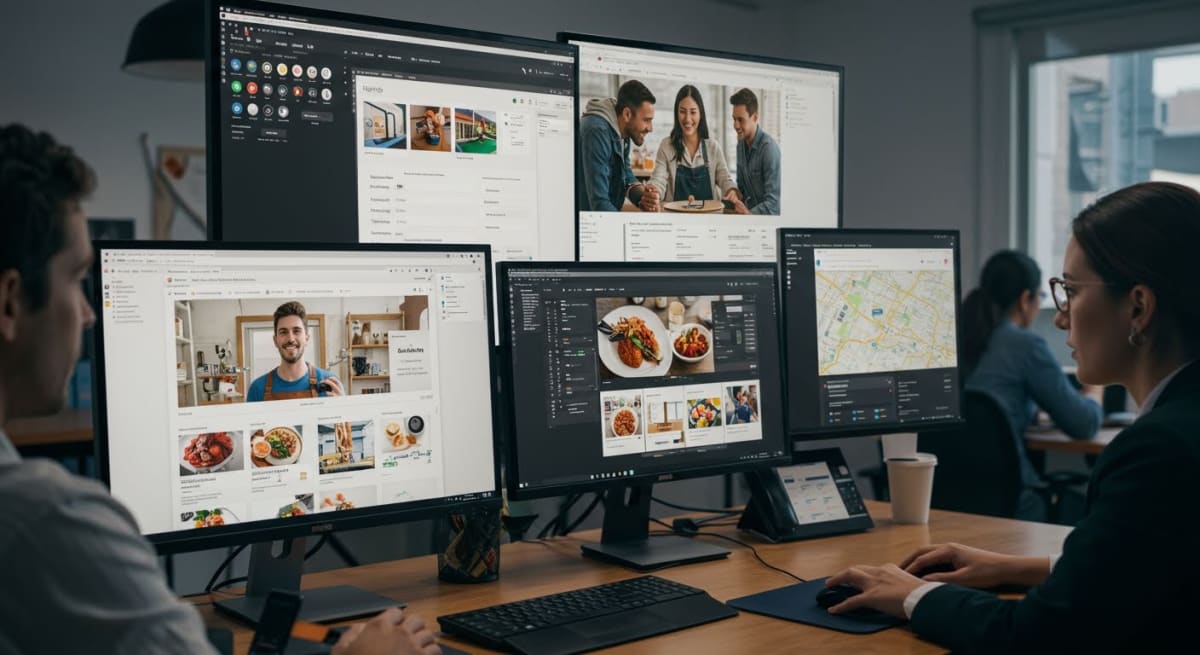 Web development for service businesses extends far beyond visual design. Your Marion electrical contracting company or medspa needs integrated systems that capture leads, schedule appointments, and rank on Google Maps—not just attractive pages that sit idle. Strategic web development integrates business systems including lead capture, appointment scheduling, and local SEO optimization to create comprehensive digital infrastructure rather than isolated websites.
Effective web development for service-based businesses integrates five critical systems: lead capture forms with CRM connection, Google Business Profile integration for local visibility, appointment scheduling where applicable, mobile click-to-call functionality, and automated backup systems that prevent catastrophic data loss.
What Does Web Development Include for Local Service Businesses?
Professional web development encompasses these critical business website features:
- Lead capture forms with instant email notifications and CRM integration
- Google Business Profile connection for automated review display and map visibility
- Appointment scheduling systems synced with business calendars
- Mobile click-to-call buttons that convert 67% of mobile visitors into phone leads
- SSL certificates, firewall protection, and daily automated backups
- Analytics tracking configured to measure traffic sources and conversion rates
- Content management systems allowing business owners to update service descriptions
- Local SEO schema markup for enhanced Google Maps rankings
Lead Generation Systems Built Into Web Development
The difference between a website and a lead capture website lies in strategic conversion architecture. Every Marion contractor, restaurant owner, or dispensary operator needs forms that actually generate business inquiries, not generic contact templates that disappear into spam folders.
Proper lead capture systems include multi-step quote request forms that qualify prospects before they reach your phone. A roofing contractor’s website should ask about roof type, damage description, and preferred contact time—filtering serious homeowners from casual browsers. Medspa consultation booking forms capture service interest, preferred dates, and patient concerns before the appointment, reducing no-shows by 43%.
CRM integration matters more than most business owners realize. When your website form connects directly to your customer management system, leads flow into your sales pipeline automatically. You’re not manually copying contact information from email notifications at 9 PM after finishing a job. The system works while you focus on service delivery.
Mobile click-to-call functionality converts browsers into callers immediately. When a homeowner searches “emergency electrician near Marion” at 7 PM with a tripped breaker, they’re calling the first number they can tap. Your web development must prioritize prominent phone buttons that trigger immediate calls on mobile devices—where 76% of local service searches occur.
Local SEO Integration During Development Phase
Local SEO web development embeds visibility infrastructure directly into your website’s foundation rather than attempting optimization afterward. Schema markup tells Google exactly what services you offer, where you operate, and how customers can contact you. This structured data appears in search results as rich snippets showing ratings, hours, and service areas.
Google Business Profile integration displays your latest reviews directly on your homepage, building immediate credibility. Visitors see real customer feedback without leaving your site. This integration also ensures NAP consistency—your business name, address, and phone number match exactly across Google Maps, your website, and directory listings.
Location page architecture matters for Marion businesses serving multiple communities. A contractor working throughout Grant County needs individual pages for Marion, Gas City, Upland, and surrounding areas. Each location page includes specific service area content, local landmarks, and community references that strengthen geographic relevance signals.
Proper local SEO foundation during web development establishes the technical infrastructure required for sustained Google Maps visibility. Meta descriptions, title tags, header structures, and internal linking patterns all influence how search engines understand your service offerings and geographic coverage.
Security and Backup Infrastructure
Security infrastructure protects your digital business asset from the constant threats facing WordPress websites. SSL certificates encrypt data transmission between visitors and your server—essential for contact forms collecting customer information. Google penalizes websites without SSL certification in search rankings, and browsers display alarming “Not Secure” warnings that immediately destroy credibility.
Firewall protection blocks malicious login attempts, SQL injection attacks, and bot traffic that consumes server resources. Marion dispensaries handling patient information and restaurants processing online orders face particular security obligations. A compromised website exposes customer data and creates legal liability beyond lost business.
Daily automated backups prevent catastrophic data loss when security breaches occur. Your website contains years of service descriptions, team bios, project galleries, and blog content. Without reliable backup systems, a single malware infection can destroy this digital asset overnight. Professional web development includes offsite backup storage with one-click restoration capabilities.
Analytics and tracking setup measures what’s actually working. You need to know whether website traffic comes from Google searches, Facebook posts, or Google Maps listings. Conversion tracking reveals which pages generate quote requests and which content fails to engage visitors. This performance data guides ongoing website management decisions rather than guessing what might improve results.
Content management capability empowers you to update business hours during holidays, add new team members, or modify service descriptions without contacting a developer for every minor change. The system should be intuitive enough for office managers to handle routine updates while complex modifications remain managed by your website partner.
Website Management Services: Why Web Development Requires Ongoing Maintenance
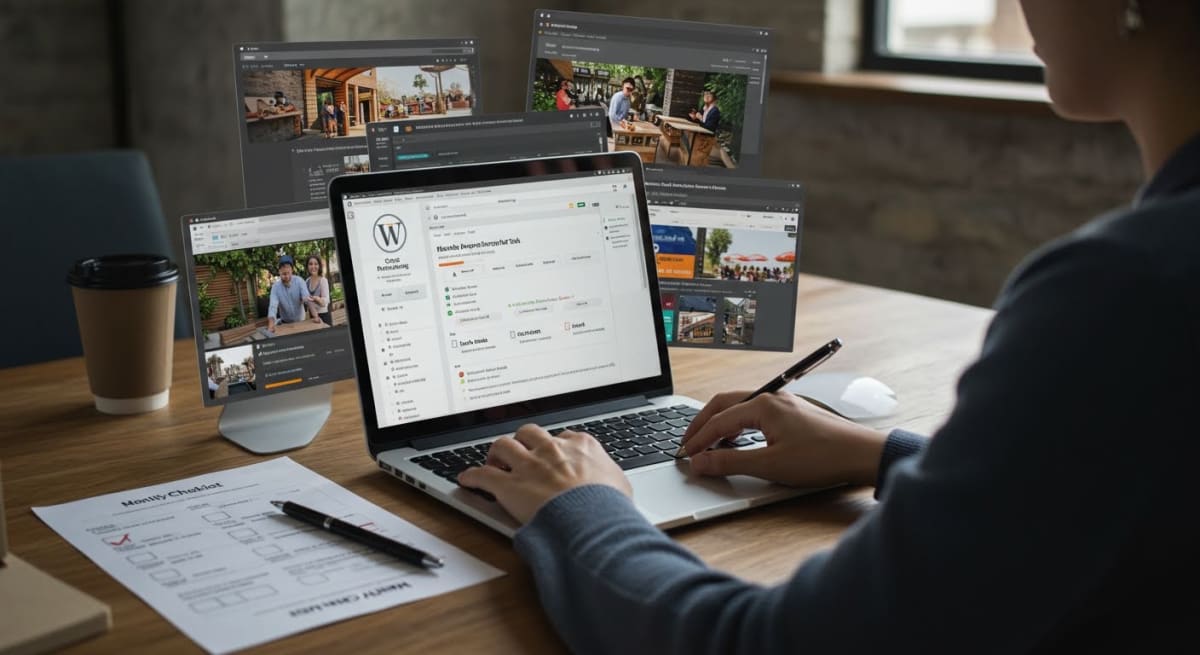 Website management services are ongoing professional maintenance programs that handle security updates, performance optimization, content updates, backup verification, and technical troubleshooting to keep business websites secure, fast, and effective. The harsh reality is that web development doesn’t end when your site launches—it’s actually just the beginning of what should be a long-term digital partnership. Your website is a living digital asset that requires consistent attention, not a one-time project you can set and forget.
The typical small business website requires 14-23 monthly maintenance tasks including security updates, plugin compatibility checks, performance monitoring, broken link repairs, and content freshness updates—tasks that take professional developers 90-120 minutes but can consume 6+ hours for inexperienced business owners. For Marion service businesses like contractors, medspas, and restaurants already running lean operations, this time commitment simply isn’t realistic. That’s why professional website management and maintenance services have become essential for businesses that want their websites to actually work as revenue-generating tools.
Monthly Website Maintenance Task Breakdown
Understanding what ongoing website maintenance actually involves helps business owners recognize why DIY approaches rarely succeed. These aren’t optional nice-to-haves—they’re critical tasks that protect your investment and maintain your online visibility.
- WordPress core updates and security patches applied within 48 hours of release
- Plugin compatibility testing and updates across 8-15 installed extensions
- Performance monitoring and Core Web Vitals optimization for mobile-first indexing
- Broken link identification and repair across all pages and blog posts
- Backup verification and disaster recovery testing to prevent data loss
- Uptime monitoring and server response time optimization
- Content freshness updates to maintain search engine trust signals
- Security scanning for malware, vulnerabilities, and unauthorized access attempts
Professional WordPress maintenance services handle these tasks systematically every month, following documented workflows that catch issues before they impact your business. When your electrician business in Marion loses a weekend job because your contact form stopped working after a plugin update, that’s not just an inconvenience—it’s measurable lost revenue. Website management services provide proactive monitoring and maintenance that prevents security breaches, performance degradation, and ranking drops while freeing business owners to focus on revenue-generating activities.
The Cost of Neglected Website Maintenance
The consequences of skipping regular website maintenance compound quickly. A Marion dispensary owner recently came to us after their site was compromised through an outdated plugin vulnerability—the cleanup cost $2,800 and took two weeks, during which their Google rankings plummeted. Their previous developer had built them a beautiful site but offered no ongoing support, leaving them to handle updates themselves. They simply didn’t know what they didn’t know.
Security vulnerabilities aren’t the only risk. Google’s algorithm prioritizes websites that demonstrate consistent maintenance through fresh content, fast loading speeds, and mobile optimization. When you neglect ongoing website maintenance, your local search visibility slowly erodes. Your competitors with active website management services gradually outrank you for “electrician near me” and “medspa Marion” searches that drive qualified local traffic.
Performance degradation happens gradually as your content library grows, images accumulate, and database tables bloat. What started as a fast-loading site in Year One becomes sluggish by Year Three without proper optimization. Core Web Vitals scores drop, mobile users bounce, and conversion rates decline—often without business owners realizing why their website stopped generating leads.
The time reality check hits hardest for small business owners. That 90-120 minutes of monthly maintenance assumes you already know what you’re doing. For Marion restaurant owners or contractors learning as they go, these tasks stretch to 6+ hours monthly—time pulled directly from customer service, job completion, or family obligations. Even then, inexperienced maintenance often misses critical security updates or creates plugin conflicts that break site functionality.
This is the fundamental difference between project-based web development and true website management services. One delivers a finished product and walks away. The other builds a partnership where your digital presence receives the same consistent professional attention that keeps your physical business running smoothly. For service-based businesses that depend on their website to generate leads, ongoing maintenance isn’t an upsell—it’s the foundation of a website that actually works.
How to Choose a Web Development Partner for Long-Term Success
 Choosing a web development partner requires evaluating long-term relationship potential, WordPress expertise, and understanding of small business needs rather than simply comparing one-time project pricing. Most Marion service businesses—electricians, medspas, restaurants, contractors, and dispensaries—need ongoing digital support, not just someone to build a site and disappear. The right website development partner becomes a strategic asset that keeps your online presence competitive as search algorithms, security threats, and customer expectations evolve.
Effective web development partnerships extend beyond initial website launch—the best developers provide strategic guidance, proactive maintenance, and ongoing optimization that compounds business growth over years rather than delivering one-time projects that become outdated within months. This distinction separates web development agencies that build sustainable digital infrastructure from vendors who simply deliver templated websites with no follow-through.
Essential Questions to Ask Web Development Candidates
Your vetting process should reveal whether a WordPress developer understands service business realities or just builds generic websites. Start with these critical questions that expose partnership readiness:
- Ask about their ongoing support model. Request specific details about website management services, response times for urgent issues, and monthly maintenance tasks. Developers who offer comprehensive support packages covering security updates, performance monitoring, and content changes demonstrate partnership thinking. Red flags include “we’ll be available if you need us” vagueness or forcing you to purchase hourly support blocks.
- Inquire about WordPress-specific expertise and customization approach. Ask how they handle Core Web Vitals optimization, plugin security vetting, and mobile-first design implementation. Template-only developers who rely exclusively on page builders create performance bottlenecks and design limitations. Your web development agency should explain custom development capabilities that solve your specific business challenges.
- Request client references from similar service businesses. Ask for contact information from at least three clients they’ve supported for over two years. Long-term client relationships demonstrate reliability and value delivery. When speaking with references, ask about communication responsiveness, proactive recommendations, and whether the developer helped improve local SEO visibility and lead generation.
- Clarify website ownership and access. Confirm you’ll own your domain registration, hosting account credentials, and all website content. Some developers restrict access to maintain control, creating vendor lock-in situations that prevent you from switching providers. Your custom website design partner should provide full transparency and portability.
- Evaluate their local business understanding. Ask how they approach Google Business Profile optimization, local search visibility, and service area targeting. Developers experienced with Marion service businesses understand the importance of mobile-responsive design for customers searching “near me” and the lead generation priorities that matter to contractors, restaurants, and healthcare providers.
Evaluating Web Development Portfolios and References
Portfolio evaluation reveals actual capabilities beyond marketing promises. Look for these specific indicators when reviewing a web development agency’s previous work:
- Demonstrated results for similar businesses—case studies showing measurable improvements in organic traffic, local search rankings, or conversion rates for electricians, medspas, or other service providers
- Visual design quality that reflects professional branding without appearing templated or identical across multiple client sites
- Mobile experience testing—actually browse portfolio sites on your phone to evaluate loading speed, navigation usability, and contact form functionality
- Client relationship longevity—websites actively maintained and updated over multiple years rather than abandoned post-launch
- Clear communication style during consultations—developers who ask detailed questions about your business goals, target customers, and competitive challenges rather than pushing predetermined packages
The partnership mindset versus transactional project mentality becomes evident in how developers discuss ongoing optimization. Agencies focused on long-term success proactively recommend improvements based on performance data, search algorithm updates, and emerging customer behaviors. Project-based vendors disappear after launch, leaving you with WordPress sites that become security vulnerabilities and performance liabilities within months.
Stop struggling with outdated websites and inconsistent online visibility. Bochi Web provides comprehensive web development and ongoing management for Marion service businesses who need digital partners they can trust. Request your free website consultation today.
Getting Started: The Web Development Process From Strategy to Launch
 Professional web development follows a strategic eight-step process beginning with business goal definition and concluding with ongoing management establishment—this approach ensures websites deliver measurable results rather than simply existing online. Your Marion service business deserves a development process that prioritizes business outcomes over aesthetic preferences, integrating technical excellence with measurable performance from day one.
The web development process differs fundamentally from template-based website builders. Custom WordPress development requires structured phases that align your digital presence with specific business objectives—whether you’re an electrician needing appointment bookings, a medspa generating consultation requests, or a contractor showcasing completed projects to local property managers.
Discovery Phase: Defining Website Goals and Requirements
Successful web development projects follow structured processes that prioritize business strategy before design decisions, integrate technical excellence with user experience, and establish maintenance frameworks that preserve long-term value. The discovery phase establishes this foundation through collaborative sessions that identify your revenue drivers, competitive positioning, and operational constraints.
During discovery, your web development partner evaluates:
- Business outcomes your website must achieve (lead generation volume, appointment booking conversion, service area visibility)
- Current digital infrastructure including existing WordPress installations, Google Business Profile status, and abandoned marketing tools
- Competitor analysis within Marion’s service business landscape to identify differentiation opportunities
- Technical requirements such as online scheduling integration, payment processing, or inventory management systems
- Content assets you already possess versus elements requiring professional creation
- Local SEO objectives including specific neighborhoods or ZIP codes you serve
This discovery work prevents the costly redesigns that plague businesses who started with template-based solutions. A restaurant owner doesn’t need the same WordPress architecture as a contractor—your site structure must reflect how customers actually search for and evaluate your specific services.
Development Timeline: What to Expect From Start to Launch
The website development timeline for service businesses typically spans 6-10 weeks, though custom WordPress development complexity varies based on integration requirements and content scope. Understanding this timeline helps you coordinate marketing initiatives, seasonal promotions, or business launches around your digital presence going live.
- Define business goals and success metrics through discovery sessions that identify what “website success” means for your specific operation—qualified leads, phone calls, direction requests, or online bookings.
- Select the appropriate WordPress approach by evaluating custom development versus managed platforms, determining which plugins serve business functions without creating technical debt, and establishing hosting infrastructure that supports Core Web Vitals performance.
- Design information architecture and user journeys that mirror how Marion customers search for services, prioritizing mobile navigation patterns and conversion pathways over complex menu structures.
- Implement mobile-first design and content creation beginning with smartphone experiences, since 73% of local service searches occur on mobile devices where slow-loading or desktop-optimized sites lose potential customers immediately.
- Develop custom functionality and integrate business systems including scheduling platforms, CRM connections, payment processors, or specialized tools your industry requires without forcing workarounds.
- Configure local SEO foundations and Google Business Profile connections ensuring your website and Maps listing reinforce identical business information, service areas, and customer messaging.
- Execute comprehensive testing and Core Web Vitals optimization across devices, browsers, and connection speeds to guarantee performance before launch rather than discovering issues after customers encounter them.
- Establish ongoing website management protocols covering WordPress updates, security monitoring, performance optimization, content refreshes, and the 23 monthly maintenance tasks that prevent sites from becoming outdated digital liabilities.
This structured web development process prevents the frustration Marion business owners experience when designers deliver beautiful websites that don’t rank on Google, don’t convert visitors, or require technical expertise to update. Your development partner should explain how each phase connects to measurable business outcomes, not just project milestones.
Your business deserves a website that works as hard as you do. Let Bochi Web handle your web development and ongoing management so you can focus on running your business. Request a website consultation to discuss your specific goals and timeline.
Frequently Asked Questions
What Is Web Development for Small Business Owners?
Web development is the technical process of building, programming, and maintaining a website's functionality, performance, and backend systems—distinct from web design which focuses on visual appea...
What is the difference between Web Development and Web Design: Understanding the Difference?
Web design determines how your site looks—the colors, fonts, layout, and images that reflect your brand. Web development determines how your site works—the speed, functionality, mobile responsiveness, security protocols, and content management capabilities that directly impact whether potential ...
What should you know about what modern web development includes in 2026?
Today's professional web development for service businesses encompasses significantly more than basic HTML coding.
Phil Bochi
Owner, Bochi Web
Phil Bochi runs Bochi Web, a website management, maintenance, and local SEO company for small businesses across the U.S. and Canada. He writes about practical website help for business owners who want their site handled — not explained.